
How to Protect a Natural Wood Single Vanity From Bathroom Moisture
A bathroom vanity can start showing damage long before major problems become obvious. Swollen corners, faded finishes, wrapped cabinet doors and discoloration around the sink often begin as small changes that seem easy to ignore.
The issue is that bathrooms expose materials to more than occasional splashes of water. Steam, humidity and trapped moisture constantly affect surfaces throughout the day.
A natural wood single vanity can bring warmth and character into a bathroom but moisture exposure requires attention. With the right maintenance habits and protective measures, you can prevent damage and extend the lifespan of your vanity instead of dealing with expensive repairs or early replacement.
| Table of Contents |
Why Bathroom Moisture is Tough on Natural Wood
Natural wood constantly reacts to its environment. Unlike synthetic materials, wood absorbs and releases moisture as humidity levels rise and fall. Bathrooms create repeated cycles of steam and moisture exposure, especially after showers and baths. Over time, these cycles can lead to issues such as:
- Expansion and contraction of wood panels
- Wrapping around doors and drawers fronts
- Small cracks developing in the surface
- Finish deterioration and loss of protection
The challenge is that damage usually happens gradually. A wood single vanity may look perfectly fine on the surface while humidity slowly weakens finishes and affects internal structure.
Signs Your Vanity May Already be Reacting to Moisture
Catching problems early is easier and less expensive than replacing damaged cabinetry later. You should watch for warning signs such as:
- Bubbling or peeling finishes
- Darkened or discolored areas near water sources
- Soft edges around cabinet corners
- Doors or drawers that stop lining up properly
- Musty smell beneath the sink
Small changes often indicate moisture is already finding its way into the wood single vanity’ material.
Ways to Protect a Natural Wood Single Vanity From Bathroom Moisture
Choose a Vanity With a Strong Protective Finish
Protective finishes act like a barrier between the wood and moisture in the room. Polyurethane coatings and moisture-resistant sealants help reduce water absorption and slow long-term wear.
Pay close attention to areas that commonly get overlooked including sink cutouts, exposed edges and corners around the countertop opening. These spots often become moisture entry points first.
A quality wood single vanity with drawers should also have properly sealed drawer edges and cabinet interiors for better long-term protection.
Keep Bathroom Humidity Under Control
Humidity control prevents moisture from building up around cabinets and surfaces. Simple steps make a noticeable difference:
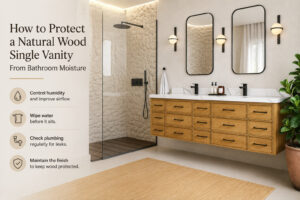
- Run exhaust fans during and after showers
- Open windows whenever possible
- Improve airflow throughout the bathroom
Bathrooms without ventilation often become moisture traps where steam lingers long after showers end.
Wipe Water Before it Sits Too Long
Water sitting on surfaces for extended periods gradually weakens protective coatings. Pay particular attention to areas people commonly overlook:
- Around the faucet base
- Along sink edges
- Cabinet corners and seams
Quickly wiping wood single vanity surfaces takes seconds and prevents moisture from sitting long enough to penetrate the finish.
Keep Wet Towels and Standing Water Away
Wet towels draped over cabinet doors may seem harmless but repeated contact exposes surfaces to constant moisture. Standing water near the vanity creates similar issues. Protective finishes work best when moisture exposure remains short and occasional rather than continuous. Repeated contact eventually wears away surface protection and allows moisture to reach the wood underneath.
Inspect Under-Sink Plumbing Regularly
Hidden plumbing leaks create some of the worst moisture problems because they often remain unnoticed for long periods. You should check underneath sinks regularly for:
- Small drips
- Water stains
- Condensation buildup
- Damp cabinet surfaces
Slow leaks may appear minor but can cause significant damage to your wood single vanity over time.
Resale and Maintain the Surface Over Time
Protective finishes do not last forever. Regular inspection helps identify areas where the finish may be thinning or wearing away. You should look for:
- Dull spots
- Surface roughness
- Minor cracking in coatings
A wood bathroom vanity 24 inch model or larger vanity unit benefits from occasional resealing to maintain protection and preserve appearance.
What if Your Vanity is Already Taking Moisture Damage
Small moisture issues do not always mean replacement is necessary. Early action can often stop damage from spreading. You should start by taking practical steps, such as:
- Dry affected areas immediately
- Identify and fix the source of moisture
- Sand and resale small damaged sections where appropriate
- Replace worn or damaged sink caulking
However, replacement may become more practical if you notice:
- Extensive swelling
- Soft or weakened wood sections
- Structural damage affecting cabinet function
Addressing issues early often prevents minor repairs of your wood single vanity from becoming a complete vanity replacement project.
Concluding Words
Natural wood remains a popular choice because it adds warmth, texture and timeless appeal to bathroom spaces. The key is understanding that moisture management is just as important as appearance.
Controlling humidity, preventing standing water and maintaining protective finishes can significantly extend the life of a wood single vanity. Small maintenance habits usually cost very little compared to major repairs later.
If you are planning a bathroom upgrade, choosing quality construction from the beginning can make long-term maintenance easier. Bathroom Vanity Norcross offers vanity solutions designed with balanced style, durability and practical everyday performance.
FAQs
Can a natural wood single vanity hold up in a humid bathroom?
Yes. Natural wood single vanity can perform well in humid environments when it has proper protective finishes, good ventilation and regular maintenance to reduce long-term moisture exposure.
What is the best finish for protecting a wood bathroom vanity?
Polyurethane and moisture-resistant sealants are commonly used because they create a strong protective layer that helps prevent water absorption and surface damage.
How long does a natural wood single vanity typically last?
A well-built wood single vanity with regular maintenance can often last many years. Material quality, humidity levels and upkeep habits all influence lifespan.
Do solid wood vanities perform better than MDF in bathrooms?
Solid wood generally offers better durability and can be refinished if needed. MDF resists some movement but may deteriorate more quickly if moisture reaches exposed areas.