
Powder Room vs Master Bath | How to Select the Best Wood for Vanity Units
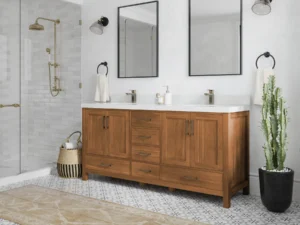
A bathroom vanity that performs beautifully in one room may struggle in another. A guest powder room experiences far less moisture than a busy master bathroom, so the same material will not always deliver the same lifespan. Choosing the best wood for vanity units means considering more than appearance.
The wrong choice can lead to swelling, peeling finishes, or costly replacements much sooner than expected. This guide explains how different bathroom environments affect wood performance and what you should compare before investing in a vanity that lasts.
Powder Room vs Master Bath: Why the Bathroom Type Changes Everything
Not every bathroom places the same demands on a vanity. Understanding how each space is used helps you choose materials that will continue performing well over time.
A powder room typically serves guests and sees limited daily use. Water exposure is minimal, showers are absent, and humidity remains relatively low. In contrast, a master bathroom often experiences repeated showers, steam, splashing water, and frequent cleaning throughout the day.
These differences directly influence how timber responds over the years. Even the best wood for vanity units performs better when matched to the environment it is designed for rather than simply chosen for its appearance.
Why a Powder Room Gives You More Material Flexibility
Lower humidity allows homeowners to focus more on aesthetics without sacrificing durability. Decorative finishes, unique grain patterns, and lighter maintenance requirements become practical options because moisture exposure remains relatively limited.
What Makes a Good Wood Vanity?
Selecting a vanity involves much more than choosing a timber species. Construction quality, moisture resistance and long-term stability all play equally important roles.
The best wood for vanity installations combines several characteristics rather than excelling in only one area. A quality vanity should resist moisture, remain structurally stable, minimize warping and continue operating smoothly despite years of everyday use.
Maintenance requirements also deserve careful attention. Some woods require periodic sealing, while others naturally tolerate damp conditions with less ongoing care. Looking beyond the showroom finish helps prevent disappointment after installation.
Solid Wood vs Engineered Wood
Solid timber offers natural beauty and excellent longevity when properly maintained. Engineered wood often provides greater dimensional stability because its layered construction reduces expansion and contraction caused by humidity.
Both options can perform well, provided they are manufactured to a high standard and suited to the bathroom environment.
Don’t Ignore the Protective Finish
Even premium timber benefits from quality surface protection. Properly sealed finishes help repel moisture, minimize staining, and extend the lifespan of the vanity cabinet significantly.
Best Wood Choices for Powder Room Vanity Units
A powder room provides greater freedom when selecting vanity materials because moisture exposure remains relatively low. Rather than focusing only on maximum water resistance, homeowners can balance appearance, durability and budget more comfortably.
Choosing the best wood for vanity applications in a powder room often comes down to selecting materials that maintain their appearance while handling occasional humidity.
Oak
Oak remains a popular option thanks to its attractive grain, dependable strength, and timeless appearance. It suits guest bathrooms where durability and visual appeal are equally important.
Maple
Maple offers a smooth, refined finish that complements both contemporary and transitional interiors. It handles moderate humidity well and maintains a clean appearance with routine care.
Engineered Wood with Quality Veneer
High-quality engineered wood finished with durable veneers provides an affordable alternative without sacrificing everyday performance. When manufactured properly, it performs reliably in lower-moisture powder rooms while delivering an attractive finished appearance.
Best Wood Choices for Master Bathroom Vanity Units
Master bathrooms place much greater demands on vanity materials. Daily showers, constant humidity, water splashes, and frequent cleaning all increase the likelihood of moisture-related damage over time. Investing in better materials often delivers stronger long-term value because replacements become far less likely.
Teak
A teak wood vanity remains one of the strongest choices for bathrooms exposed to regular moisture. Natural oils within the timber help resist water absorption, making it highly durable while requiring relatively little maintenance. Although it represents a premium investment, many homeowners appreciate its longevity and rich appearance.
Marine-Grade Plywood Construction
Marine-grade plywood offers outstanding structural stability in demanding environments. Its layered construction helps minimize expansion and contraction caused by changing humidity, making it a common feature in premium vanity cabinets designed for long-term reliability.
White Oak
A white oak vanity provides an excellent balance between durability, moisture resistance, and cost. Its dense grain naturally performs better than many hardwood alternatives in humid environments while delivering a timeless appearance that suits both modern and traditional bathrooms.
Before You Buy, Check These Details Too
Wood selection is only part of the decision. Before purchasing, inspect the overall construction quality carefully. Look for:
- Soft-close hinges and drawer slides
- Waterproof interior coatings
- Strong cabinet joinery
- Sink compatibility
- Adequate bathroom ventilation
If you’re planning to shop for bathroom vanities in Atlanta GA, compare the cabinet construction just as closely as the timber species. Superior craftsmanship often has a greater impact on long-term performance than appearance alone.
Conclusion
Choosing the best wood for vanity units depends on where the vanity will be installed rather than simply selecting the timber with the nicest finish. Powder rooms offer greater flexibility, while master bathrooms demand materials that withstand constant humidity and everyday use. By comparing durability, moisture resistance, protective finishes, and construction quality before purchasing, you’ll enjoy a vanity that continues looking and performing its best for years.
Visit Bathroom Vanity Norcross to explore quality vanity options designed for lasting performance and everyday practicality. Visit us today.
FAQs
What wood lasts longest in a bathroom?
Naturally moisture-resistant woods such as teak are widely recognized for their long lifespan, especially when combined with quality construction and protective finishes.
Can solid wood crack in humid bathrooms?
It can if moisture levels fluctuate significantly or the timber is poorly protected. Proper sealing and quality construction help minimize this risk.
Does the vanity finish really matter?
Absolutely. Protective finishes help resist moisture, stains, and everyday wear, extending the lifespan of the cabinet. Before you shop for bathroom vanities in Atlanta GA, always compare both the finish quality and the cabinet construction.